

The collaboration between FLIM LABS and Scuola Normale Superiore enters its operational phase, laying the foundations for a joint laboratory dedicated to nanomedicine innovation.
Started in July 2026 and funded by the FISA programme, the Italian Fund for Applied Sciences, U-SCREEN is now entering its operational phase. The project marks an important step in the collaboration between FLIM LABS and Scuola Normale Superiore, within the NEST infrastructure centre in Pisa.
One of the first milestones is the formal presence of FLIM LABS inside the facilities of Scuola Normale Superiore, through the creation of a joint laboratory at NEST. This space will form the basis for a structured collaboration between academic research and technological development.
The goal is to create an environment where research knowledge can gradually translate into innovative solutions for the study and development of nanostructured systems for nanomedicine.
At the same time, work is underway to prepare the laboratory spaces and infrastructure needed for experimental activities, with the aim of making them fully operational in the first quarter of 2027.
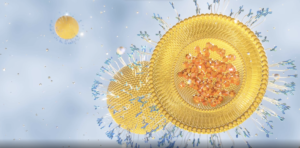
Conceptual illustration of lipid nanoparticles (LNPs), the microscopic “suitcases” that transport nucleic acids, such as RNA and DNA, in nanomedicines.
This infrastructure work is moving in parallel with the start of the scientific programme. The team is already active in the development and production of nanoparticles for the encapsulation and delivery of DNA and RNA. These first activities represent an essential step toward studying the properties of the formulated systems and preparing for their later characterization, with particular attention to nanoparticle behaviour and the cargo they carry.
“The possibility of bringing together scientific and technological expertise is central to transforming research results into new opportunities for innovation. With U-SCREEN, we are building the conditions for a structured collaboration between FLIM LABS and Scuola Normale Superiore, combining infrastructure development with the launch of experimental activities,” says Francesco Cardarelli, scientific lead of the project.
Over the coming months, the consolidation of the laboratory infrastructure and the continuation of experimental work will guide the next phase of U-SCREEN. The project aims to strengthen the dialogue between research and innovation, creating a shared foundation for new methods to characterize nanoparticles and supporting the transfer of scientific knowledge toward future applications in nanomedicine.